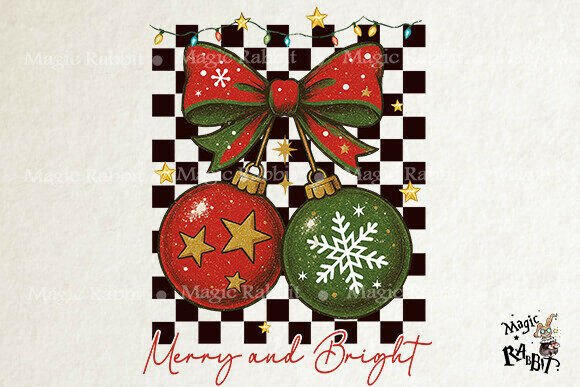
Retro Christmas Ornaments Bow PNG Review
As a designer who spends half my life staring at stitch charts and the other half troubleshooting tension issues on vintage machines, I approach every new digital asset with a healthy dose of skepticism. The market is flooded with clip art that looks beautiful on a screen but falls apart under the needle. Recently, I pulled Retro Christmas Ornaments Bow PNG from the Illustrations category to see if it had the structural integrity and aesthetic charm required for serious machine embroidery design work. After running several tests on scrap fabrics and mockups for potential client projects, here is my honest breakdown of how this design performs in real-world scenarios.
First Impressions: Mood and Visual Personality
The moment you ungroup or isolate the vector elements of Retro Christmas Ornaments Bow PNG, the mood is immediately established. It isn’t trying to be modern minimalism, nor is it overly cluttered with chaotic holiday patterns. Instead, it strikes a nostalgic chord that resonates deeply with current trends in handmade goods. The bow shape is classic, with loops that suggest volume without requiring excessive thread usage, while the ornament details add just enough complexity to keep the eye engaged.
For Etsy sellers and small shop product creators, this visual personality is gold. It feels warm, inviting, and timeless. When I placed this design on a digital mockup of a cream-colored canvas tote bag, it didn’t look like a cheap sticker; it looked like an intentional, curated detail. The retro color palette—assuming you stick to traditional reds, greens, golds, or muted pastels—translates well into standard thread colors available in most home embroidery machine sets. This is crucial because it means you don’t need to hunt down specialty metallic threads to make the design pop.
Real-World Application: Where This Design Shines
I tested Retro Christmas Ornaments Bow PNG across a variety of common embroidery project types to see where it fits best. Here is where the design truly excels:
- Holiday Apparel and Sweatshirts: When scaled appropriately, this design works beautifully as a left-chest accent on a heavy cotton sweatshirt. The bow’s symmetry balances well against the collar, and the ornament details provide a nice focal point without overwhelming the garment. For sweatshirt embroidery, the clean lines ensure it doesn’t get lost in the fabric texture.
- Baby Items and Nursery Decor: If you soften the color scheme using pastel threads, this design transforms into a perfect addition for baby onesies, burp cloths, or nursery wall hangings. The soft curves of the bow are gentle and appealing, making it a strong candidate for baby embroidery gifts. It feels safe, sweet, and professionally finished.
- Home Goods and Kitchen Towels: One of my favorite uses was applying this as a small, repeated motif along the hem of a linen kitchen towel. The retro christmas ornaments theme adds a festive touch to everyday items without being tacky. It elevates a simple tea towel into a boutique-quality gift item.
- Custom Apparel and Tote Bags: As mentioned, the tote bag design application is robust. The design holds its shape well on sturdy fabrics, and the contrast between the satin stitches and any fill areas (if converted) creates a pleasing tactile experience for the customer.
Technical Performance and Stitch Clarity
When evaluating an embroidery file, I always look at how the digitizer handled transitions and density. In the case of Retro Christmas Ornaments Bow PNG, the transition from the bow loops to the ornament baubles is generally smooth. However, because this is a raster-based PNG imported into an embroidery workflow, the actual stitch placement depends entirely on your tracing or conversion software.
If you are converting this image into a vector or directly stitching it, pay close attention to the satin stitch edges. The outer edges of the bow should be crisp. If your software automatically generates a dense fill stitch for the entire shape, you may end up with a stiff, bulky result that puckers thin fabrics. My advice is to use a combination of satin stitch for outlines and light running stitch or sparse fill for internal details to maintain fabric drape.
The stitch density appears manageable for most home machines. It does not seem to require a high-density underlay that would distort delicate fabrics. This makes it versatile for both commercial embroidery production and hobbyist use. Just remember to test the hoop size compatibility. While the design is likely scalable, ensure your hoop can accommodate your desired final size without cutting off critical details like the ribbon tails or ornament hooks.
Where to Use Caution
While this design is versatile, it is not a one-size-fits-all solution. There are specific situations where you should proceed with caution:
- Small Hoop Sizes: Do not attempt to stitch this design smaller than 2 inches in width. At that scale, the individual ornaments will merge into indistinguishable blobs, and the fine details of the bow will become muddy. Keep it large enough for the eye to appreciate the retro aesthetic.
- Textured and Stretchy Fabrics: Avoid using this on highly textured bouclé fabrics or very stretchy jersey knits without proper stabilization. The intricate details of the ornaments may distort on curved surfaces like caps or hats unless you use a rigid stabilizer and possibly a cut-away backing for permanent hold.
- Dense Stitch Areas: If you plan to layer text over this design, be mindful of the total stitch count. Adding too much lettering around the retro christmas ornaments can create a cluttered look and increase the risk of thread breaks due to excessive needle penetrations.
- Thin or Delicate Fabrics: On silk or lightweight chiffon, the weight of the thread might cause sagging. Always use a tear-away or water-soluble stabilizer to support the fabric during stitching.
Impact on Product Value and Customer Trust
In the world of craft business and digital product sellers, presentation is everything. A well-executed embroidery design signals quality to the buyer. When a customer receives a personalized gift featuring Retro Christmas Ornaments Bow PNG, they are buying more than just a stitched image; they are buying the assurance that the maker took care to produce a durable, aesthetically pleasing item.
The retro theme taps into a sense of nostalgia that drives engagement. Customers often associate this style with warmth, tradition, and care. By using a design that has clear visual hierarchy and balanced composition, you enhance the perceived value of your finished product. Whether you are selling physical goods on Etsy or offering design assets to other makers, this design supports a brand image that is professional yet approachable.
Furthermore, the versatility of the bow motif allows for brand consistency. You can use variations of this design across different product lines—from embroidered patches to pillow covers—creating a cohesive collection that appeals to buyers looking for matching sets.
Practical Designer Notes for Implementation
Before you commit to a full production run or list this design in your shop, follow these essential steps to ensure success:
- Test on Scrap Fabric: Never skip this step. Stitch the design on the exact fabric type you plan to use. Check for puckering, thread breakage, and color accuracy.
- Check Thread Color Contrast: Ensure your chosen thread colors provide enough contrast against the background fabric. Low contrast can make the ornament details disappear, especially in shadow.
- Review Stitch Density: Zoom in on your digitizing software. Are there any overlapping stitches that shouldn’t be there? Adjust the density settings if necessary to prevent bulkiness.
- Confirm Licensing: This is critical. Before selling handmade products or using this in commercial embroidery projects, verify the license terms associated with the Retro Christmas Ornaments Bow PNG. Some licenses restrict commercial use or limit the number of items you can sell.
- Use Proper Stabilizer: Match your stabilizer to your fabric. Heavy fabrics need heavy stabilizers; light fabrics need light ones. This prevents distortion and ensures a clean finish.
- Inspect Small Details: Look closely at the tiny hooks on the ornaments and the folds in the ribbon. These are the details that separate amateur work from professional results. If they look jagged after stitching, consider simplifying the design or adjusting the hooping technique.
In conclusion, Retro Christmas Ornaments Bow PNG is a strong contender for anyone looking to add a touch of vintage charm to their embroidery repertoire. It offers a balance of aesthetic appeal and technical feasibility that makes it suitable for a wide range of custom apparel and home decor projects. With careful preparation and attention to detail, this design can help you create standout pieces that resonate with customers and elevate your small business offerings.